
KSC.JUSNREM
Constitution.codesConstitution as Code
AskJUS.smart

Constitution of the Islamic Republic of Pakistan, 1973

Article 11Slavery, forced labour, etc., prohibited

Text in force from the official consolidation, as amended to 21 November 2025. Square brackets omitted; numbered notes mark each amendment and are set out under History.

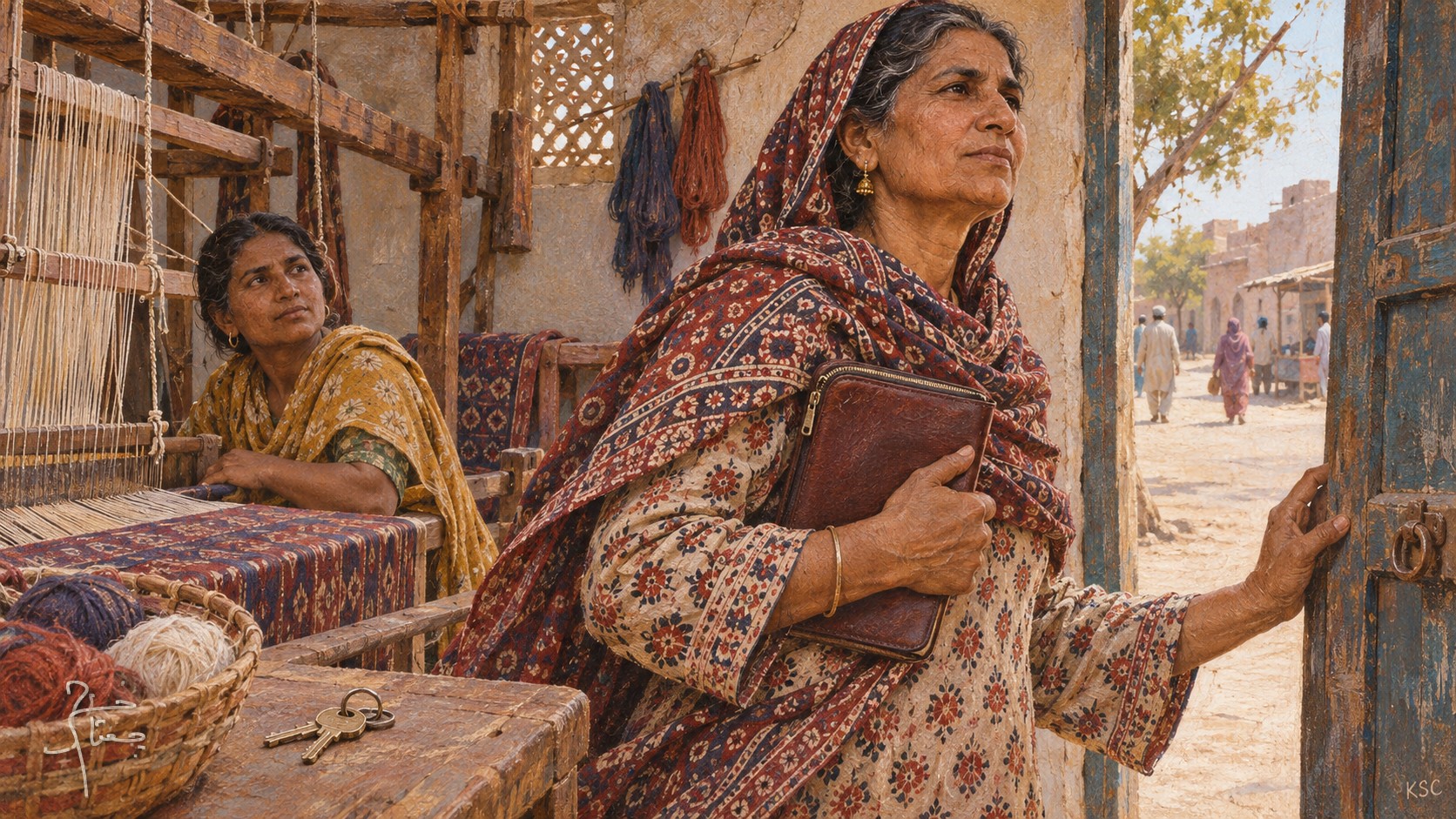
Painting for Article 11: Slavery, forced labour, etc., prohibited

Text in force · official consolidation, as amended to 21 November 2025

(1) Slavery is non-existent and forbidden and no law shall permit or facilitate its introduction into Pakistan in any form.

(2) All forms of forced labour and traffic in human beings are prohibited.

(3) No child below the age of fourteen years shall be engaged in any factory or mine or any other hazardous employment.

(4) Nothing in this Article shall be deemed to affect compulsory service–

(a) by any person undergoing punishment for an offence against any law; or

(b) required by any law for public purpose :

Provided that no compulsory service shall be of a cruel nature or incompatible with human dignity.

JUS.smart answers from the text of this Article and the records on this site, and names the Articles it read.

Previous: Article 10ANext: Article 12

History of this article

No amendment is recorded.

The official consolidation records no insertion, substitution or omission in Article 11 since the Constitution was made in 1973.

In Reconstituting Public Power

Article 11 in the five Books.

Khurram Chughtai's discussion of this article: the Topics that address it, with the sentence that names it, the author's doctrines they apply and the judgments their notes rely on. Drawn from the text by machine; each Topic opens in the reader.

  1. Topic 26Equal civic standing (arts 4, 11, 14, 20 to 28, 34 and 36)Chapter 2, Purpose, Scope and Transformative CommitmentsFormal equality is insufficient. The beneficiaries and scope of each existing constitutional right follow its text: some protections attach to citizens, others to persons, and others to specified groups (as in arts 4, 9, 10, 10A, 11, 14 and 25).
  2. Topic 35Social and economic independence (arts 3, 11, 17, 23, 24, 25A and 38)Chapter 2, Purpose, Scope and Transformative CommitmentsLiberty is hollow under compulsion of want. Article 11 prohibits forced labour.
  3. Topic 136The President: office, qualification, term and oath (Constitution of 1962, arts 9 to 12)Chapter 6, The 1962 Constitution and the Presidential Administrative StateThe office. Article 11(1) required him, before entering upon his office, to make an oath before the Chief Justice of the Supreme Court in the form set out in the First Schedule, clause (2) excepting a person acting as President.
  4. Topic 459The core, and the questionChapter 19, Structural Exploitation and Article 3What is not in doubt. Article 11(2) provides that “All forms of forced labour and traffic in human beings are prohibited”, and Article 3 reinforces that prohibition.
  5. Topic 483Negative and positive dimensions, and delivery rightsChapter 20, Fundamental Rights, Social Citizenship and Effective RemediesThe negative dimensions. They restrain what the State may do to persons: no deprivation of life or liberty save in accordance with law (art 9); no slavery or forced labour (art 11); no torture for the purpose of extracting evidence (art 14(2)); no compulsion to do what the law does not require (art 4).
  6. Topic 494Article 11Chapter 20, Fundamental Rights, Social Citizenship and Effective RemediesWhat it prohibits and protects. Article 11 prohibits slavery, forced labour and traffic in human beings, and protects children below fourteen from employment in a factory or mine or in other hazardous employment.
  7. Topic 496Association and occupationChapter 20, Fundamental Rights, Social Citizenship and Effective RemediesArticle 17. What the two establish together with Article 11.
  8. Topic 507The meaning adoptedChapter 20, Fundamental Rights, Social Citizenship and Effective RemediesThe definition, and its status. Its footholds include the delivery dimensions of Articles 9A, 19A, 25 and 25A; the labour and association rights of Articles 11, 17 and 18; dignity under Article 14; and the Principles of Policy, especially Article 38, read with those rights and not as equivalents of Article 8.
  9. Topic 839Labour and collective voiceChapter 45, Land, Labour, Credit, Markets and Economic IndependenceEntry, association and humane conditions have distinct foundations. Article 11(2) prohibits all forms of forced labour and trafficking in human beings; clause (3) prohibits employment of children below fourteen in factories, mines and other hazardous employment, while clause (4) specifies limited exceptions to the Article’s prohibitions.

Doctrines of the author applied

  • Structural exploitation1 Topic discussing Article 11 · first stated in Topic 26

Judgments relied on

  • Federal Public Service Commission v Dr Shumaila Naeem PLD 2026 SC 1cited in 1 note

Law as Code · Laws that refer to this article

2 laws name Article 11.

Federal laws only. Found in the stored text of each law, where it refers to this article of the Constitution. Proposed links: not yet checked by a person. Each title opens the law in the Legis-Intel library on jusnrem.legal, with its stored text and source.

  1. Federal · 2022Islamabad Capital Territory Domestic Workers Act, 2022“…e for regulation of employment of domestic workers in Islamabad Capital Territory WHEREAS Articles 3 and 11 of the Constitution aims to eliminate all forms of exploitation and prohibits slav…”
  2. Federal · 1992Bonded Labour System (Abolition) Act, 1992“…March 1992] An Act to provide for abolition of bonded labour system WHEREAS clause (2) of Article 11 of the Constitution of the Islamic R epublic of Pakistan prohibits all forms of forced la…”